


Andropause (Male Menopause): Symptoms, Age and Treatment
What andropause actually is, why 'male menopause' is a misleading name, the symptoms, what age it typically starts, and the treatment options available.
A clear UK guide to the symptoms of low testosterone in men. What to look for, what's normal ageing, and when to get tested. Doctor-led advice from Arc TRT.


Written and medically reviewed by Dr Chris Airey, TRT Doctor at Arc TRT — BMBS MMedSc Dip ENDO, GMC 7490533. View full profile →
Low testosterone rarely announces itself. It doesn't arrive overnight. It shows up gradually, often dismissed as stress, age, or just the way life feels in your 40s.
By the time most men realise something's actually wrong, they've usually been living with the symptoms for years.
Here are the signs worth paying attention to, the ones most often missed, and what to do if a few of them feel familiar.
Not the kind of tired you can fix with a good night's sleep. The kind that's there when you wake up, drags through the afternoon, and makes the gym feel like a much bigger ask than it used to.
This is the single most common symptom men describe when they first come to us. It's also the one most often misattributed to "just being busy."
You used to hold three things in your head at once. Now you forget why you walked into the room. Decisions feel heavier. Conversations drift.
Testosterone influences cognitive function. When it drops, mental sharpness often goes with it.
A lower libido is one of the most well-documented signs of testosterone deficiency. It's also one of the most underreported, because men rarely volunteer the information unprompted.
If sex feels less interesting than it used to, and that change has been gradual rather than situational, it's worth investigating.
Testosterone isn't the only factor in erections. Cardiovascular health, blood pressure, medication and stress all play a role. But low testosterone can contribute to weaker or less frequent erections, particularly the loss of morning erections.
This is also worth flagging because erectile dysfunction can be an early warning sign of cardiovascular issues, regardless of testosterone.
You're putting in the same hours at the gym. The results aren't there. Recovery takes longer. Strength plateaus or drops.
Testosterone plays a direct role in muscle protein synthesis. When levels fall, training stops paying out the way it used to.
Weight gain in your 30s and 40s isn't all hormonal. Diet, sleep and activity matter enormously. But low testosterone shifts how your body stores fat, particularly around the abdomen.
There's also a two-way relationship worth knowing about. Excess body fat increases aromatase activity, which converts testosterone to oestrogen and lowers your free testosterone further. This is one of the reasons we offer weight loss support alongside TRT where it's clinically appropriate. Treating both together usually produces better results than treating either in isolation.
If your body composition has changed even though your habits haven't, that's a signal.
This is one of the most overlooked symptoms because it gets filed under mental health rather than hormonal health.
Men with low testosterone often report a flat, low-grade mood that doesn't quite fit clinical depression. Some report anxiety they didn't have before. Others notice a shorter fuse, irritability over things that wouldn't normally bother them.
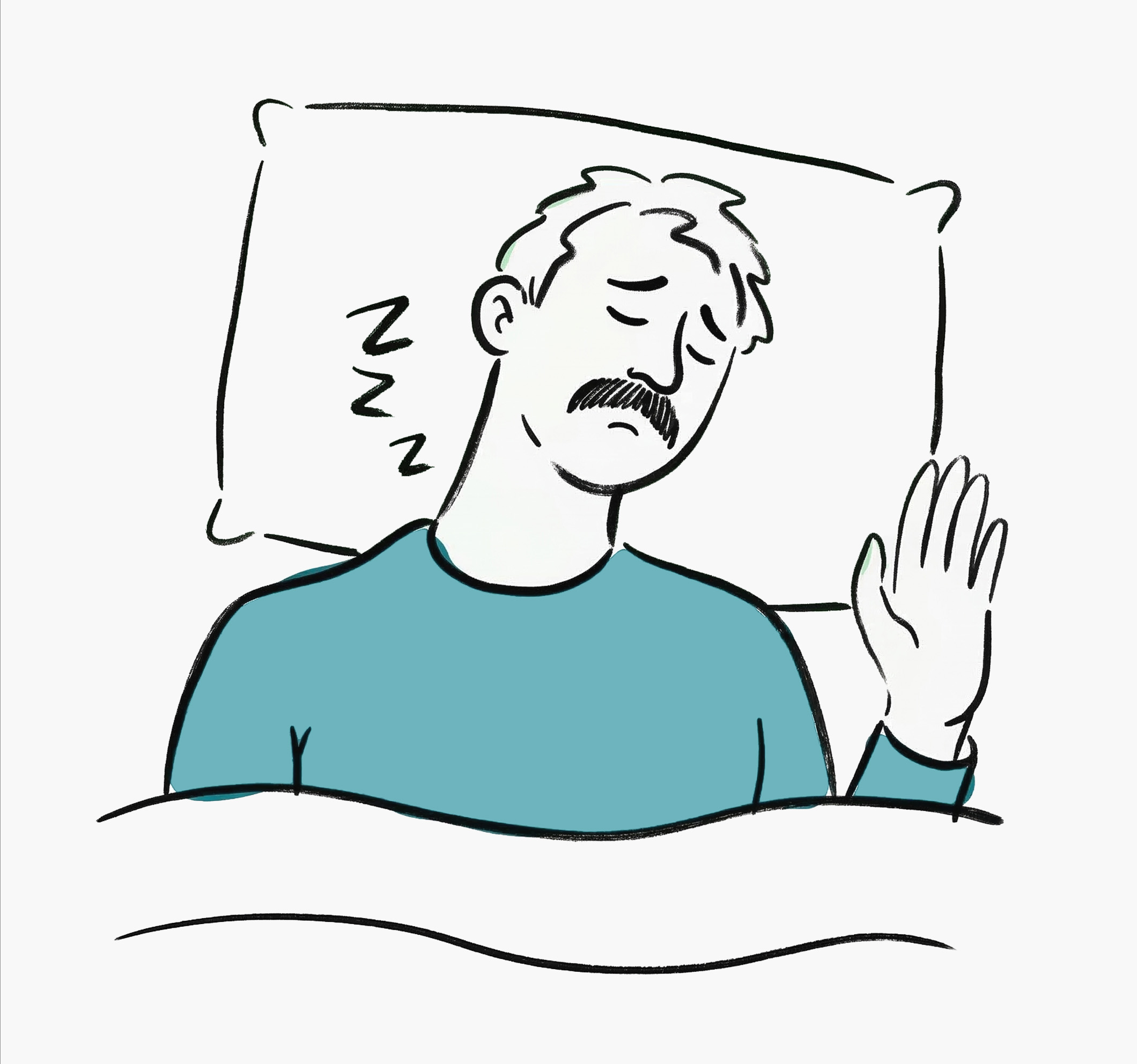
Difficulty falling asleep, waking through the night, or sleeping a full eight hours and still feeling unrefreshed. Testosterone and sleep have a two-way relationship. Poor sleep lowers testosterone, and low testosterone disrupts sleep.
Not depression. Just a general flattening of the things that used to feel important. Ambition fades. Hobbies stop pulling you in. The internal push that got you out of bed early and made you say yes to things is quieter.
This one is hard to measure, but men who've experienced it almost always recognise it when they hear it described.
Closely related to drive, but distinct. A creeping sense of being less assertive, less decisive, less yourself in situations that didn't used to faze you.
Less commonly discussed in men, but they happen. When testosterone drops significantly, some men experience the same temperature regulation issues more commonly associated with menopause.
A slow but noticeable thinning of body hair, or a beard that grows more slowly than it used to. Not a reliable standalone symptom, but worth noting alongside others.
Testosterone levels do decline gradually after about age 30, by roughly 1 to 2% per year on average. Some decline is normal and not pathological.
What's not normal:
If two or more of the symptoms above feel like you, and they've persisted for more than a few months, it's worth getting tested rather than guessing.
A proper assessment in the UK includes:
The British Society for Sexual Medicine (BSSM), which sets UK clinical standards, considers a total testosterone below 12 nmol/L the threshold at which treatment may be considered, alongside bothersome symptoms.
It's worth being clear: many of these symptoms can come from other causes. Sleep apnoea, thyroid disease, depression, vitamin D or B12 deficiency, iron deficiency and metabolic issues all overlap.
That's why a good clinical assessment doesn't just measure testosterone. It rules out the other possibilities first.
If you've read this and recognised yourself in a handful of these symptoms, you don't need to commit to anything. The next sensible step is information.
A blood test gives you data. Data lets you make a decision. The decision might be lifestyle changes, addressing another underlying issue, or considering testosterone replacement therapy.
What it shouldn't be is more years of putting up with symptoms you've been told to ignore.
Ready to find out what's actually going on?
Arc TRT offers comprehensive, doctor-led blood testing as the first step in understanding your symptoms. Over 3,000 UK men trusted, and counting.
This article is for general information and does not replace personalised medical advice. Speak to a qualified clinician about your individual circumstances.
For the complete picture, see our full guide to TRT in the UK, covering eligibility, blood test thresholds, NHS and private routes, costs and monitoring. If you are still working out whether any of this applies to you, start with the symptoms of low testosterone.