

Your starting point
Every journey with ARC TRT begins the same way.
Understanding your hormones properly.
Whether you already have blood results, want to test from home, a clinic, or simply need guidance, you can begin here.
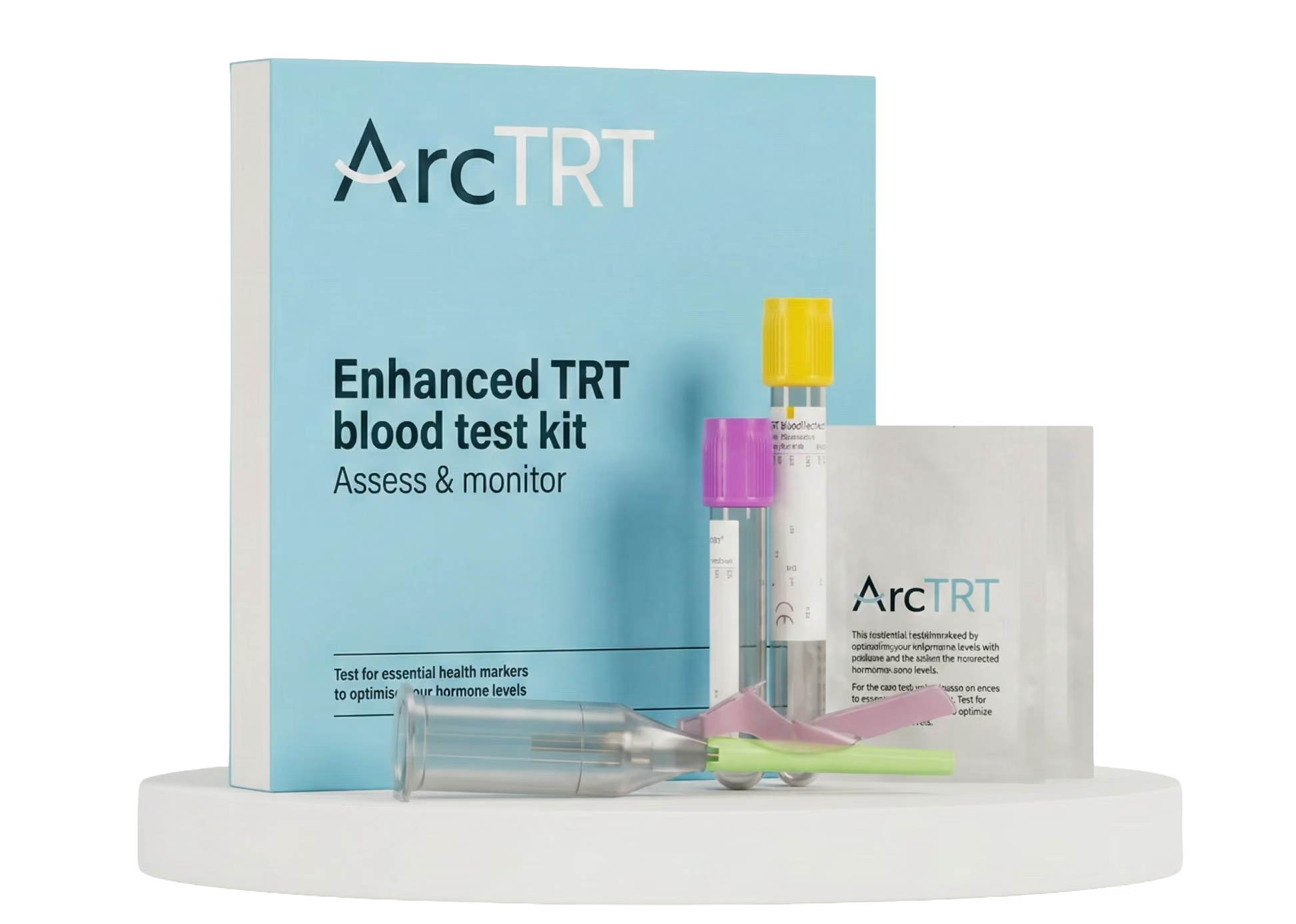
Order your blood test
If you have not tested your hormones yet, the first step is simple.
You can take an at home test, visit one of our partnered clinics for a blood draw, or arrange a home visit from a nurse.
Once your results are ready, our clinicians review them and guide you through the next steps.
Testing first ensures every decision is based on real clinical data.
Had a recent blood test?
Upload your results and skip the testing.
If you have already tested your testosterone or hormone levels within the last 6 months, you may not need to start from scratch.
Upload your recent blood results and our clinicians will review them to see whether further testing or consultation is required.
Start with the information you already have.

Have questions? Get in touch and our team will help guide you through the next steps.
Our team is always on hand to help with your queries and provide any information you need. Fill out the form and one of our team will be in touch to answer your questions, explain your options, and guide you through the next steps.
Your TRT questions, answered.

It’s rarely just one symptom. Most of our patients come to us reporting a constellation of issues: persistent fatigue, "brain fog," a drop in libido, increased body fat despite exercise, and a loss of general drive. If you recognise these symptoms, we start with a comprehensive blood panel to look at your Free and Total Testosterone, as well as other key markers, to see if a deficiency is the root cause.
Safety is our absolute priority. While TRT is life-changing for many, introducing hormones requires careful monitoring.
Skin & Fluid: Some men experience mild acne or slight water retention during the initial balancing phase.
Full Blood Count: In around 50% of men, testosterone can increase red blood cell production. This is something we monitor closely as part of your treatment. Your full blood count is checked regularly, including haemoglobin, red blood cells, and haematocrit. This allows us to keep your levels in range and adjust your treatment if needed to maintain safety and effectiveness. We monitor this at every check-up.
Oestrogen Management: As testosterone levels rise, Oestrogen does too. Rather than using harsh doses of medication to "crash" Oestrogen, we use micro-dosing to keep you in a healthy, stable range.
Blood Pressure: Taking testosterone can increase your blood pressure, it is recommended that all TRT patients regularly monitor their blood pressure at home.
Testosterone suppresses sperm production. However, if fatherhood is part of your plans, you must make your doctor aware during consultation where we can discuss it with you fully and make appropriate plans.
TRT is a long-term treatment for a chronic deficiency. Think of it like wearing contact lenses: they work as long as you use them.
You are never "locked in." If you decide to cease treatment, we provide a cessation protocol to help restart your natural production as smoothly as possible.
The NHS "normal" range is notoriously broad and doesn't account for age or how you actually feel. A 30-year-old with the testosterone levels of an 80-year-old might be in range technically, but they will feel terrible. We treat the patient, not just the number on the paper.
Yes, we have HCG in stock and available for our patients.
TRT only accelerates hair loss if you are already genetically predisposed to male pattern baldness. It doesn't create baldness where the genetics aren't present. If you are concerned, we can work with you on a protocol that prioritises hair preservation.
Irritability and mood swings are actually symptoms of low or fluctuating testosterone. By using modern, frequent dosing schedules, we eliminate the peaks and troughs, leading to a more stable, calm, and resilient mood.
Modern clinical data (including the TRAVERSE study) show that when properly monitored by a clinic like ours, TRT does not increase cardiovascular risk.
Regarding the prostate, the "gasoline on a fire" theory is outdated science. There is no clinical evidence that TRT causes prostate cancer. In fact, we monitor your PSA (Prostate-Specific Antigen) levels regularly to ensure total safety. By maintaining optimal levels and undergoing regular screening, our patients are often among the most proactive and well-monitored men in the UK.
We move away from the one-size-fits-all approach.
Injectable Testosterones: Your doctor will advise you on the specifics and methods of injections. We always provide tutorials to make sure you are confident and competent when injecting your dose.
Transdermal Gels and Creams: High-quality creams for those who prefer a needle-free route.
Oral Tablets: A convenient, needle-free option taken daily, suitable for certain patients depending on their needs and clinical profile.
HCG (Human Chorionic Gonadotropin) is a hormone used to mimic luteinising hormone (LH), helping to maintain normal testicular function during TRT. It supports your body’s own testosterone production and helps prevent shutdown of the testes. Response can vary between individuals, so it is not always guaranteed to be fully effective, but it is used as part of treatment to help preserve natural function where possible.
HCG can only be administered as a subcutaneous injection.


