

At-Home Kit
At Home Blood Testing Kit
£45
The easiest first step: check your testosterone levels.
What's checked
- Total testosterone
- Free testosterone & SHBG
- Albumin & free androgen index
How you give your sample
- Home kit
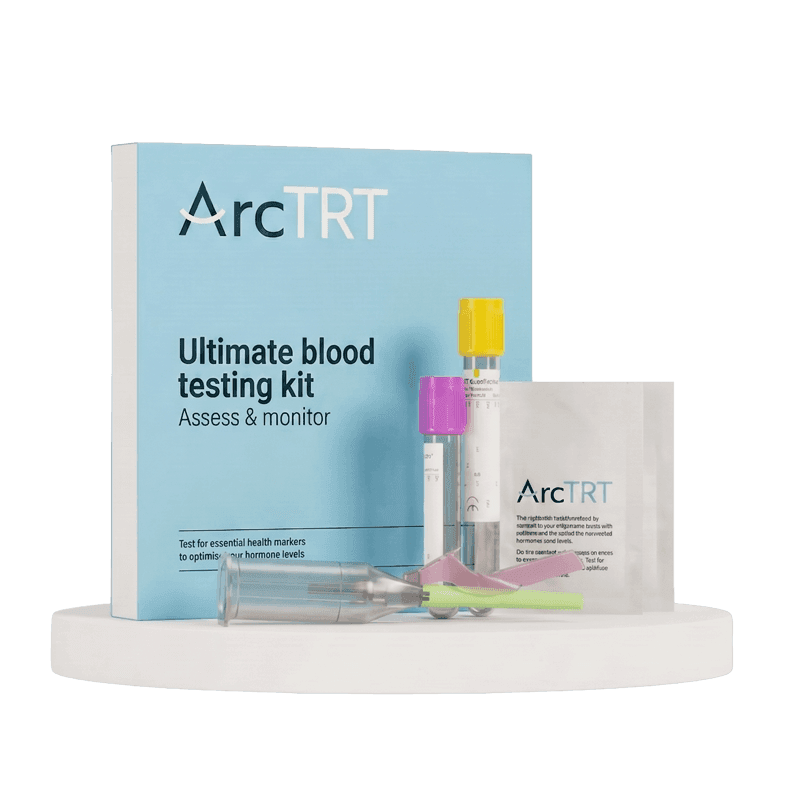
Our most comprehensive blood test: hormones, heart health, metabolism and recovery markers, for a complete picture of your health and performance.
from£299
Clinic visits take place at 300+ GoodBody partner clinics, or with no phlebotomy fee at our own Southampton clinic. Find your nearest.
The Ultimate Performance Blood Test includes advanced hormone analysis, cardiovascular markers, thyroid health, liver and kidney function, inflammation, blood sugar control, vitamin levels, and more.
Your results are reviewed by experienced clinicians to help identify deficiencies, hormonal imbalances, metabolic issues, and other health concerns that may affect how you feel and perform.
This panel is suitable for:
What it is: High-sensitivity C-reactive protein, a marker of low-grade inflammation in the body.
Why we test it: Ongoing inflammation is linked to heart disease and low testosterone. It helps us judge your cardiovascular risk more precisely.
What it is: Apolipoprotein A1, the main protein in HDL ("good") cholesterol particles.
Why we test it: Higher levels are generally protective. It shows how well your body clears cholesterol from your arteries.
What it is: Apolipoprotein B, the protein found on every potentially artery-clogging cholesterol particle.
Why we test it: It counts the number of harmful particles directly, so it predicts heart risk more accurately than LDL alone.
What it is: The ratio of ApoB to ApoA1, comparing harmful to protective cholesterol particles.
Why we test it: It's one of the strongest single predictors of heart attack risk. The lower the ratio, the better.
What it is: Lipoprotein(a), a type of cholesterol particle whose level is mostly set by your genes.
Why we test it: A raised level is an independent risk factor for heart disease and stroke that standard cholesterol tests miss. Most people only need to check it once.
What it is: Total cholesterol, all the cholesterol carried in your blood.
Why we test it: It gives an overall picture of your blood fats and is read alongside HDL and LDL to assess heart risk.
What it is: A type of fat in your blood that the body stores from excess calories.
Why we test it: High triglycerides are linked to heart disease, insulin resistance and low testosterone.
What it is: High-density lipoprotein, often called "good" cholesterol because it carries cholesterol away from your arteries.
Why we test it: Low HDL raises heart risk. TRT can lower HDL slightly, so we track it over time.
What it is: The total amount of protein in your blood, made up of albumin and globulins.
Why we test it: Abnormal levels can point to liver or kidney problems, dehydration or poor nutrition.
What it is: The most common protein in your blood. It binds testosterone loosely, so some of that testosterone can still be released and used.
Why we test it: Albumin goes into the calculation of free testosterone. It's also a general marker of liver health and nutrition.
What it is: A group of blood proteins that includes antibodies and transport proteins.
Why we test it: Read alongside albumin, it helps assess liver function, immunity and inflammation.
What it is: Alkaline phosphatase, an enzyme found mainly in the liver and bones.
Why we test it: Raised levels can point to a blockage in the bile ducts, liver problems or increased bone turnover.
What it is: Alanine transferase, an enzyme found mostly in liver cells.
Why we test it: It's the most specific marker of liver cell damage. Raised levels can come from fatty liver, alcohol, medicines or heavy training.
What it is: Aspartate transferase, an enzyme found in the liver, muscles and heart.
Why we test it: Read alongside ALT, it helps tell liver stress apart from muscle damage (for example after a hard gym session).
What it is: Gamma GT, a liver enzyme that is sensitive to alcohol and bile duct problems.
Why we test it: It's often the first liver marker to rise with regular drinking or a sluggish bile flow.
What it is: A yellow pigment made when old red blood cells are broken down and then cleared by the liver.
Why we test it: High levels can point to liver problems or faster red cell breakdown. Mildly raised levels are often harmless (Gilbert's syndrome).
Compare tests
At Home Blood Testing Kit
£45
The easiest first step: check your testosterone levels.
What's checked
How you give your sample
Recommended for best results

Enhanced Testosterone Blood Test
from£110
The full hormonal picture we'd want before considering TRT.
What's checked
How you give your sample

Ultimate Blood Test
from£299
Above and beyond: hormones plus heart, metabolism and recovery.
What's checked
How you give your sample
Why we ask for two blood tests
We know a second test can feel like an extra hurdle when you just want answers. It's there to protect you.
We require two blood tests to confirm consistently low testosterone levels, as these can naturally fluctuate due to factors such as sleep, stress and illness.
Having two sets of results also allows the doctor to cross-reference key biomarkers, identify any abnormalities and assess your overall health to ensure TRT is a safe and appropriate treatment option.
This is in line with clinical guidelines and helps ensure treatment is prescribed safely and responsibly.
Still deciding? Compare all testosterone blood tests
FAQs
If you just want to know your testosterone levels, start with the £45 at-home kit. The Enhanced test (from £110) gives the full hormonal picture we'd want before considering TRT. The Ultimate test (from £299) adds cardiovascular, metabolic and wider health markers. Unsure? Ask the team and we'll point you to the right one.
The kit arrives by post with everything you need. Collecting the sample takes a few minutes, then you return it in the prepaid envelope. Results are reviewed by a clinician, not just emailed as raw numbers.
Earlier in the day if you can: before 12pm if you're under 40, or before 2pm if you're 40 or over. You don't need to fast. UK guidelines prefer early-morning samples, but a low result later in the day still matters, and your doctor reads the time of the sample alongside the number. A low result is confirmed with a second test before any diagnosis. Your kit includes full instructions.
The Enhanced and Ultimate tests can be done as a clinic blood draw or a nurse home visit instead of an at-home kit. Choose the option that suits you when ordering.
Days, not weeks. Once the lab processes your sample, your results are reviewed by one of our clinicians and explained in the context of your symptoms.
A UK GMC-registered doctor reviews your results alongside your symptoms. If low testosterone is found and treatment is appropriate, we'll discuss your options. If it isn't, we'll tell you honestly. Taking a test carries no obligation to start treatment.
Medical care that puts you back in control, with proper testing, expert oversight and treatment tailored to you.